
Outdated state laws threaten Nigeria’s disease outbreak preparedness — NCDC
The Nigeria Centre for Disease Control and Prevention has warned that weak and outdated public health laws at the state level could undermine Nigeria’s preparedness and response to future disease outbreaks.
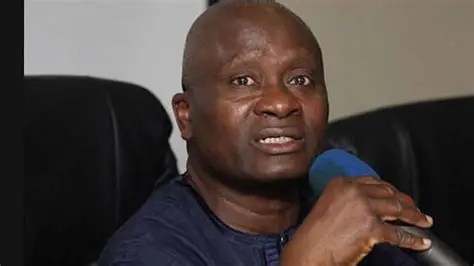
The Director-General of the NCDC, Dr Jide Idris, gave the warning while speaking on Wednesday in Abuja at the Nigeria Subnational Public Health Legal Reform Guide organised by Resolve to Save Lives
Idris, who was represented by the Deputy Director and Public Health Emergency Management Specialist, Dr Evaristus Aniaku, said states had substantial responsibilities for protecting public health, particularly because the first response to outbreaks often occurred at the subnational level.
He said although Nigeria had made progress in strengthening its public health legal framework, the 2023 Joint External Evaluation of the country’s preparedness still identified gaps in legal instruments, particularly at the state and local government levels.
“Health security cuts across many sectors and across the different levels of government. It involves Health, Agriculture, Environment, Justice, Finance, security institutions, the states and many others,” he said.
According to him, Nigeria’s obligations under the International Health Regulations require the country to maintain the capacity to prevent, detect and respond to public health threats, including those capable of spreading across borders.
He noted that while the NCDC had a central role as the country’s National Public Health Institute, the implementation of health security measures could not be left to the agency alone.
The NCDC DG said the weakness of some state laws had become more evident during recent outbreaks, particularly the COVID-19 pandemic, when questions arose over powers, responsibilities, disease reporting, data sharing, movement restrictions, inter-agency coordination and emergency financing.
“An outbreak happens somewhere. Very often, the first response is at the state or local government level.
“Yet when we began looking closely at state public health laws, we found that many states were still relying on laws enacted several decades ago,” he said.
He explained that some of the laws predated modern public health structures and practices, including Emergency Operations Centres, electronic disease surveillance, modern laboratory systems, data protection and One Health coordination.
“Some of these laws were written long before Emergency Operations Centres, electronic disease surveillance, modern laboratory systems, data protection, One Health coordination and many of the structures we now rely on in public health practice,” he said.
Idris said the NCDC, through its Legal Unit and in collaboration with Resolve to Save Lives, began supporting states to systematically review their public health laws and identify areas requiring reform.
Idris stressed that the objective of the reform was to ensure that states were legally equipped to respond swiftly when public health emergencies occurred.
“When the next outbreak comes — and we know that public health threats will continue to emerge — we should not then begin asking: Who has the authority to act? Who is responsible for what? Who must report a suspected outbreak? Can this information be shared? Who coordinates the response? Where will emergency funding come from?.
“Those questions should already have answers. And our laws should provide those answers,” he said.
Interim Country Director of Resolve to Save Lives, Dr Jenom Danjuma, said the reform process began with a national legal assessment in 2019, which identified gaps in Nigeria’s public health laws and the need for deeper assessments across the states.
He explained that the guide would provide states with a practical pathway from legal assessment to reform and implementation.
Danjuma urged states to ensure that the guide did not become another publication on a shelf, but translated into stronger laws, accountable institutions and improved public health outcomes.
All rights reserved. This material, and other digital content on this website, may not be reproduced, published, broadcast, rewritten or redistributed in whole or in part without prior express written permission from PUNCH.
Contact: [email protected]
Stay informed and ahead of the curve! Follow The Punch Newspaper on WhatsApp for real-time updates, breaking news, and exclusive content. Don’t miss a headline – join now!
Stay in the know—fast. Get instant alerts, breaking headlines, and exclusive stories with the Punch News App. Download now and never miss a beat.
Source: Punch Newspapers – Latest News

![Brymo accuses 2Face, Burna Boy, Davido of knowing about alleged cult recruitment [VIDEO]](https://newsrelay360.com/wp-content/uploads/2026/08/Brymo-Biography-And-Songs-Of-A-Renowned-Nigerian-Music-Superstar.webp)