
…says TAM approvals never had cash backing
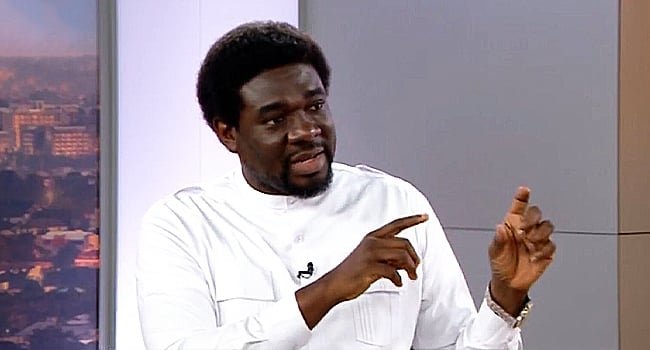
Following the controversies that trailed the Federal Government’s refineries over the years, the President of the Petroleum and Natural Gas Senior Staff Association of Nigeria (PENGASSAN), Comrade Festus Osifo, has said prior to 2021, no serious maintenance was done in any of the plants despite claims of Turn Around Maintenance (TAM) by past administrations.
Disclosing this on Monday in Lagos, Osifo also said the refineries were recently shut down because they were recording losses and not because they failed to function.
According to him, for many years, Nigerians were repeatedly told about rehabilitation and turnaround maintenance of the Port Harcourt, Warri and Kaduna refineries, but little actual work was done until 2021.
He said the situation changed when rehabilitation contracts were signed, particularly for the Port Harcourt Refinery.
“Until what started happening in 2021, if you interview somebody or people that have worked in Port Harcourt, Kaduna and Warri refineries 15 years before 2021, they will all tell you that they have never seen any rehabilitation or any turnaround maintenance compared to what they’ve seen from 2021,” Osifo said.
He explained that the rehabilitation of the Port Harcourt Refinery was extensive, describing the facility at the time as resembling a construction site.
According to him, about 90 to 95 per cent of PENGASSAN members working at the refinery were transferred to different strategic business units (SBUs) of the Nigerian National Petroleum Company Limited (NNPC Ltd.) during the rehabilitation.
Osifo said the old Port Harcourt Refinery was eventually separated from the new facility because a critical component required for the new refinery had a delivery lead time of about three and a half years.
The refineries were actually shut down, not that they were not functioning. Most of the time, the old Port Harcourt refinery and even the Warri refinery were actually shut down because they were losing money,” he said.
He likened the situation to a farmer spending N2 million to plant tomatoes but eventually getting products worth only N1.7 million, saying such a business would require reassessment to identify and block the loopholes causing the losses.
On the proposed partnership involving NNPC Ltd. and Chinese investors, Osifo said PENGASSAN supports the move, describing it as being in the right direction.
He said the association had consistently advocated the adoption of an equity partnership model similar to that of Nigeria LNG Limited (NLNG), with private investors taking a controlling stake while government retains a minority interest.
According to him, Chinese companies being brought into the refinery arrangements are expected to become equity partners rather than merely maintenance contractors.
Osifo said PENGASSAN would prefer investors to acquire up to 51 per cent equity while government retains 49 per cent, arguing that such an arrangement would reduce government interference and ensure that business decisions are driven by commercial considerations.
He said the model would also attract investment, improve the sustainability of the refineries, create jobs and enhance Nigeria’s energy security.
On the association’s relationship with journalists, Osifo acknowledged the critical role played by labour writers, editors, correspondents and advocates in promoting workers’ welfare and shaping society.
He said PENGASSAN recognised the difficult environment facing Nigerian workers, including labour journalists, and expressed confidence that the partnership between the union and the media would grow stronger under its incoming leadership.
“We can’t do it alone. So we need stakeholders, we need partners that will continuously foster that relationship together,” he said.
Osifo also highlighted what he described as the achievements of the outgoing Central Working Committee (CWC), particularly in protecting workers’ jobs and improving remuneration.
He said the union successfully protected the jobs of its members despite several divestments in the oil and gas industry.
According to him, workers were retained during transactions involving the divestment of ExxonMobil’s joint venture, Shell’s joint venture, Agip’s joint venture and other assets.
He said PENGASSAN not only protected jobs but also ensured that workers’ remuneration was maintained and improved.
“Our objective was clear: How do we protect the job of our members, and how do we enhance their pay?” Osifo said.
He added that the level of remuneration in Nigeria’s oil and gas industry had reached a new height under the current leadership.
Osifo also spoke about the union’s engagement with the Dangote Refinery, saying PENGASSAN had been able to resolve issues involving workers and ensure that about 600 affected employees returned to work at the refinery.
He said the union had chosen to engage management constructively rather than allow the matter to escalate publicly.
According to him, the affected workers are currently back at the refinery and contributing to its continued operation.
Osifo reaffirmed PENGASSAN’s commitment to protecting companies and workers within Nigeria’s oil and gas industry, saying the union would continue to work with stakeholders to ensure the growth and sustainability of the sector.